
Why Kling 3.0 Could Change AI Video Forever: The Era of Unified Storytelling
Date: February 6, 2026
Category: AI Technology / Generative Video&Image
Author: Jsam (Kling 3.0 Technical Expert)
In the rapidly evolving landscape of artificial intelligence, we often see incremental updates (slightly faster generation, marginally better resolution). However, every so often, a release arrives that promises to fundamentally shift our workflow. Based on the latest official announcements and community analysis, the arrival of Kling AI 3.0 appears to be one of those pivotal moments.
As an AI technology enthusiast, I have been closely monitoring the transition from experimental clips to production-ready engines. Today, we will dive deep into the new capabilities of Kling 3.0 video and Kling Image 3.0, analyzing why Kling 3.0 Could Change AI Video Forever by solving the industry's biggest pain points: consistency, duration, and workflow fragmentation.
The End of Fragmentation: A Unified Kling Video&Image Model
For a long time, AI video creation has been impressive but disjointed. As noted by content creators analyzing the "Higsfield" of AI tools, the workflow was fragmented: one tool for motion, one for audio (like Kling 2.6), and another for upscaling.
Kling AI 3.0 enters the "3.0 Era" with a philosophy of "All in One, One for All". The core innovation here is a deeply integrated unified model training framework. Instead of stitching together separate tasks, the Kling 3.0 video model natively handles text-to-video, image-to-video, reference-to-video, and video modification. This is not just about convenience; it is about the model understanding the relationship between audio, visual, and narrative logic simultaneously.
Kling VIDEO 3.0: The AI Director
The most significant leap in Kling 3.0 is the introduction of features that mimic a human director's mindset.
1. Multi-Shot and Cinematic Control
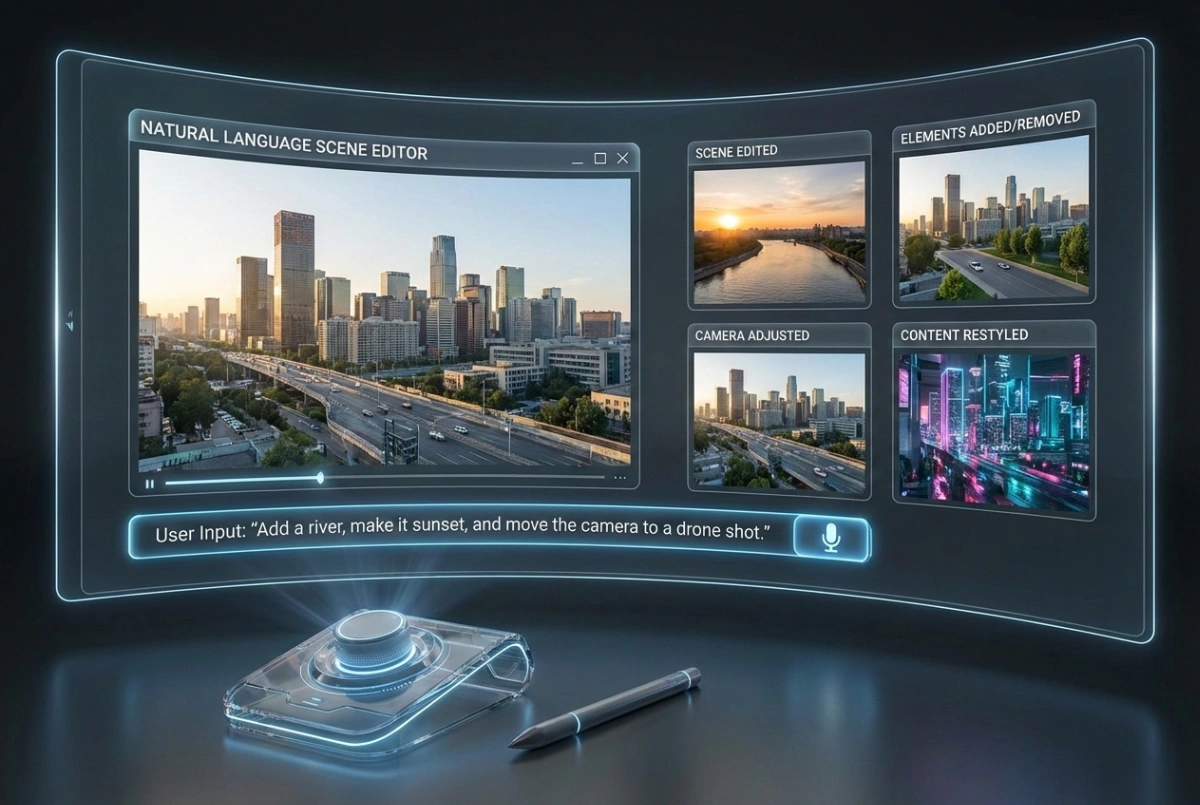
Previously, generating a video meant getting a single, often random shot. Kling 3.0 introduces the Multi-Shot feature. The model can now function as an "AI Director", understanding prompts that require scene coverage. It can automatically adjust camera angles, perform shot-reverse-shot techniques for dialogue, and handle cross-cutting. This allows creators to generate a cinematic sequence in one go, rather than tediously editing fragmented clips.
2. Breaking the 5-Second Barrier
Short duration has been the Achilles' heel of AI video. While previous models struggled to maintain coherence beyond a few seconds, Kling 3.0 video supports generation up to 15 seconds. While 15 seconds might sound modest compared to traditional filming, in the AI world, this is a massive leap. It allows for complex action sequences and scene developments (the delicate unfolding of a long shot or multiple plotlines) to exist within a single generation. This moves us closer to the community's expectation of 30 to 60-second narrative flows, effectively saying goodbye to "fragmented assembly".
3. Subject Consistency and "Elements"
Perhaps the strongest argument for why Kling 3.0 Could Change AI Video Forever is its approach to consistency. The "World's First" integration of Image-to-Video with enhanced subject consistency allows creators to lock in core elements. With Elements 3.0, you can use multi-image or even video references to anchor characters. Whether the camera pans or the scene changes, the character's traits remain stable. This addresses the "shifting face" problem that has plagued AI video for years.
Kling VIDEO 3.0 Omni: Performance and Audio
The upgrade to VIDEO 3.0 Omni takes reference-based generation to a new level.
- Acting via Video Reference: You can now upload a 3-8 second video of yourself performing, and the model will extract not just the motion, but the core character traits and voice. This allows creators to "become" the character in their story.
- Audio-Visual Coherence: Building on the native audio capabilities of Kling 2.6, Kling 3.0 offers upgraded native audio. It supports precise character referencing, meaning in a multi-character scene, the model knows exactly who is speaking. It supports multiple languages (Chinese, English, Japanese, Korean, Spanish) and can even handle bilingual dialogue with natural lip syncs and facial expressions.
Kling IMAGE 3.0: Cinematic Storytelling in Stills
We cannot overlook the launch of Kling Image 3.0. While video is the focus, static assets are often the storyboard foundation.
- Visual Chain-of-Thought (vCoT): This is a fascinating technical roadmap update. The model uses a "think first, render later" approach, performing scene decomposition and causal judgment before generating pixels.
- Image Series Mode: Crucial for storyboarding, this feature ensures logical coherence across a sequence of images. It allows for batch optimization, ensuring that the style and tone remain unified across multiple scenes.
- Native 4K Output: The move to native 2K/4K resolution enhances realism, making the output suitable for professional posters and pre-visualization materials.
Kling 2.6 vs. Kling 3.0: What Changed?
To understand the magnitude of this update, we must look at where we came from.
| Feature | Kling 2.6 / O1 | Kling 3.0 / Omni |
|---|---|---|
| Workflow | Fragmented (Audio, Motion separate) | Unified Native Multimodal |
| Duration | Short clips (approx 5-10s) | Up to 15s with complex plotting |
| Consistency | Good, but prone to drift | Elements 3.0 (Video + Voice locking) |
| Audio | Native Audio introduced | Character-specific Audio & Multilingual |
| Control | Basic prompt adherence | Multi-Shot AI Director & Custom Storyboard |
| Resolution | Standard HD | Native 4K (Image) & High Fidelity (Video) |
Conclusion: A Production-Ready Future
The shift from Kling 2.6 to 3.0 represents a transition from "experimentation" to "production". By solving the "hard problems" of consistency, audio-visual synchronization, and shot control, Kling ai 3.0 is positioning itself not just as a generator, but as a comprehensive creative partner.
Creators can now focus on the narrative rather than fighting the tool. With the ability to generate coherent 15-second multi-shot sequences, lock in characters with video references, and produce native 4K visuals, the barrier between an idea and a final video is crumbling.
It is no exaggeration to say that Kling 3.0 Could Change AI Video Forever. It moves the industry away from the novelty of random generation toward the reliability of professional storytelling. We are excited to see what creators will build with these powerful new tools.